The Situation
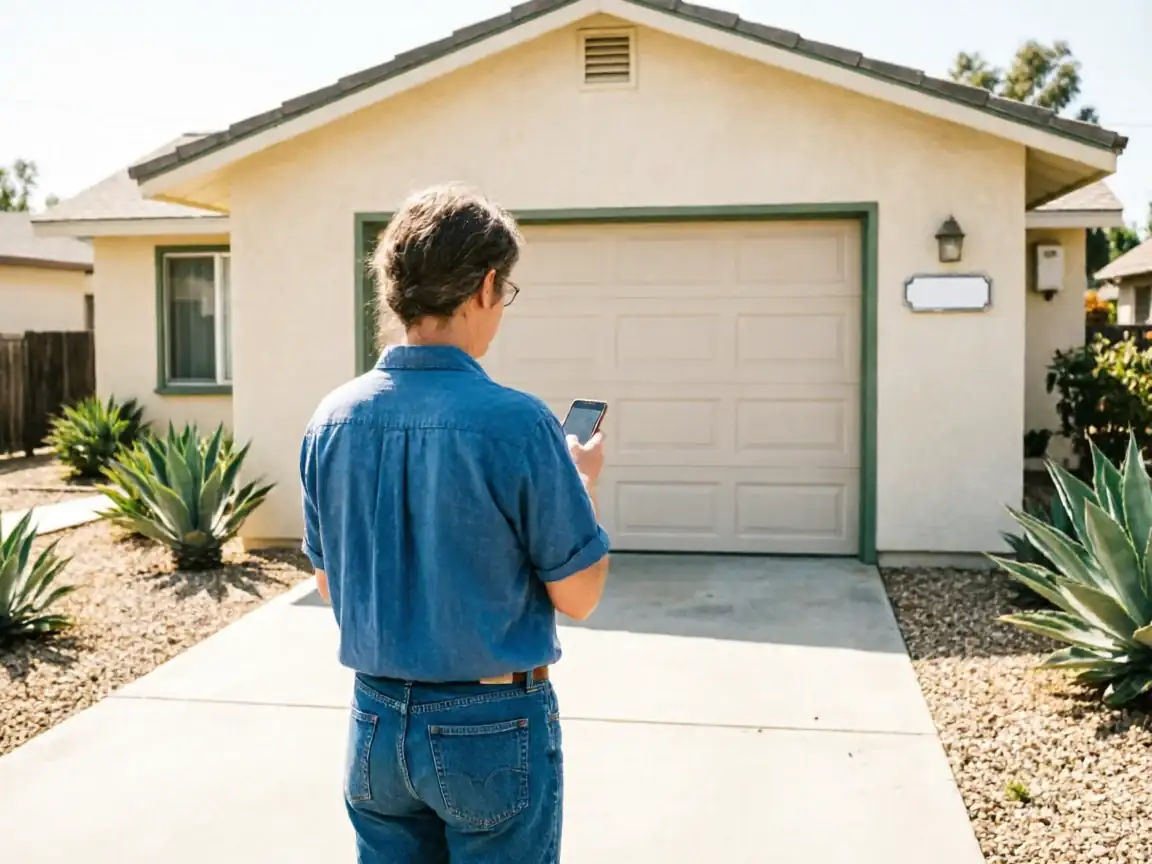
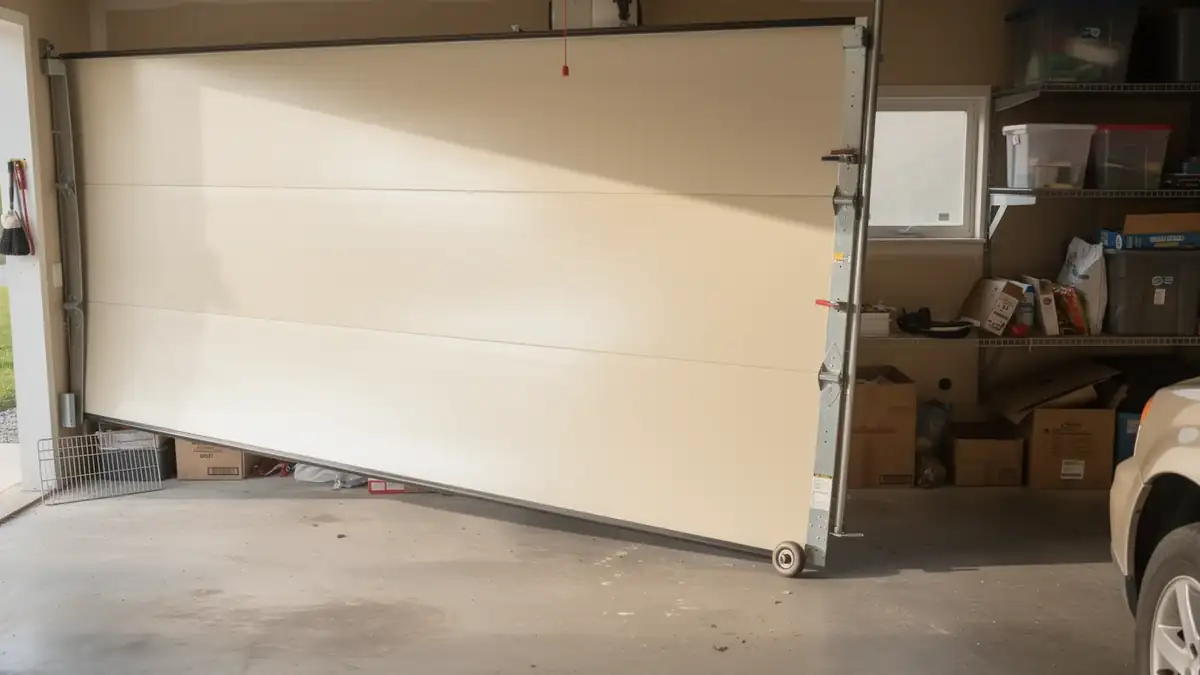
A door off track almost always starts small. One roller walks a half-inch out of the channel, the door keeps moving because the opener doesn't know any better, and by the time you notice, the panel is riding crooked or jammed sideways in the frame.
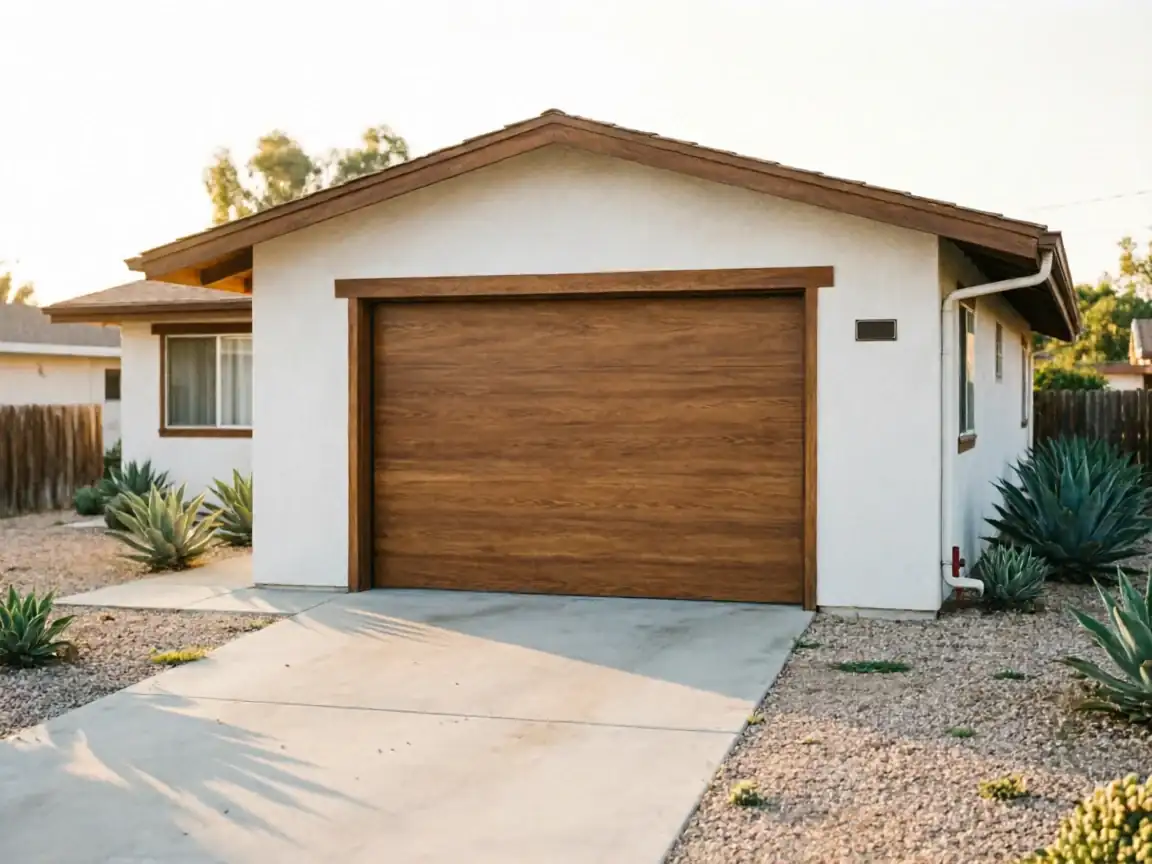
In this town that story has a specific shape. Housing here went up mostly between 1938 and 2008, with the bulk of the stock dating to the 1960s and 70s across the 39 named areas that make up Walnut Creek and the nearby pockets. A door installed or replaced on a house from that era is running track brackets and jamb hardware that were fastened to framing lumber now 50-plus years old. Wood shrinks, settles, and sometimes twists a little over that span. The track doesn't move on its own - the wall behind it does, just enough.
Newer builds closer to the 2000s end of that range usually have squarer framing and less drift, so the symptom shows up less there. But if your house sits in that mid-century band, which is most of them, a track that's a little out of plumb is more common than a bent track from impact.
What to Check
Before you call anyone, look at four things
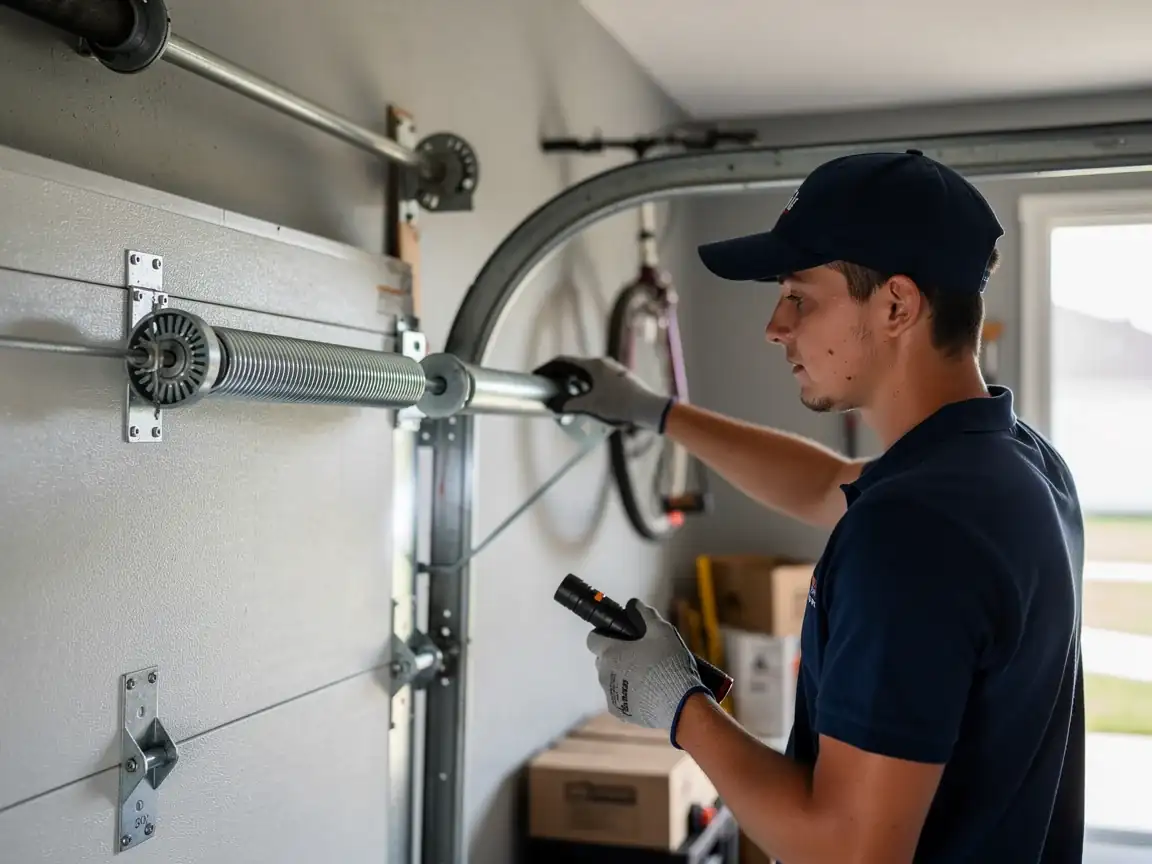
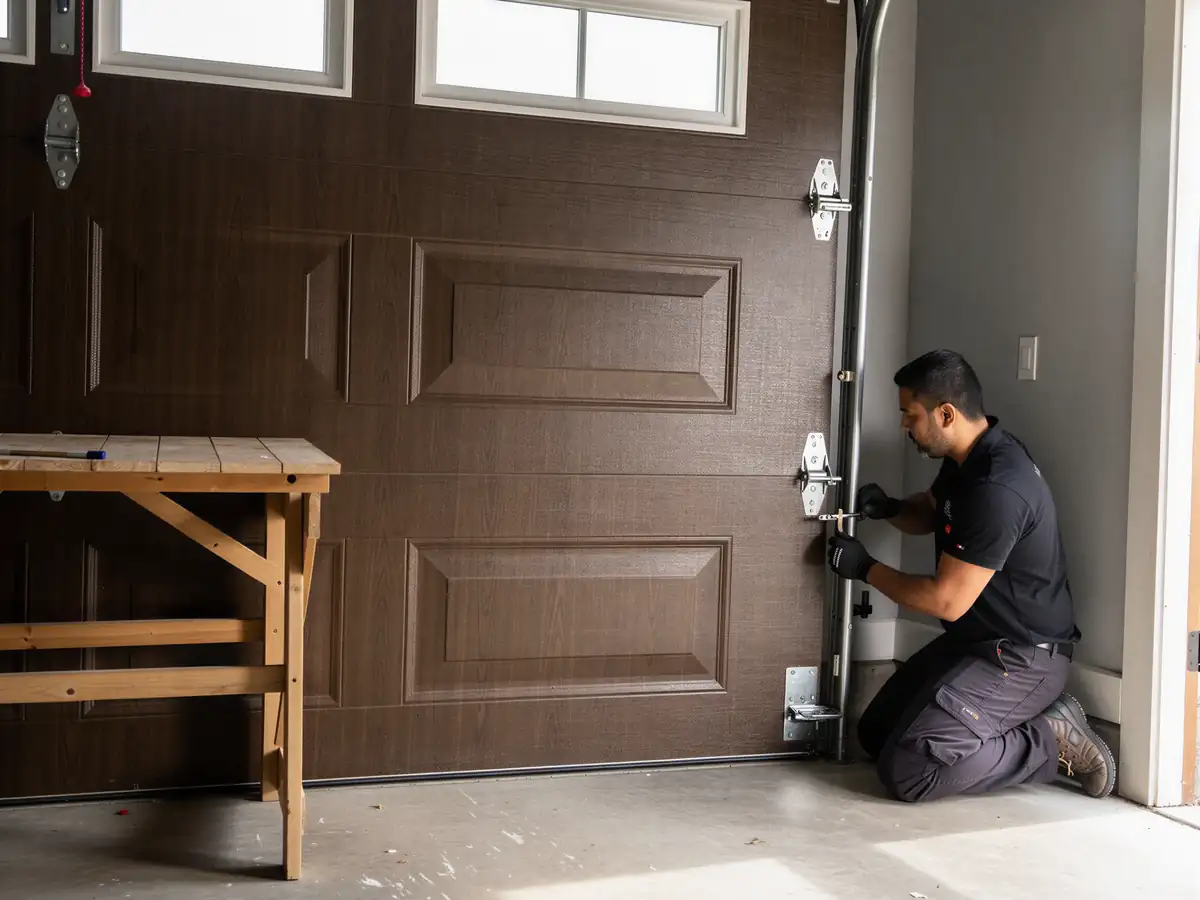
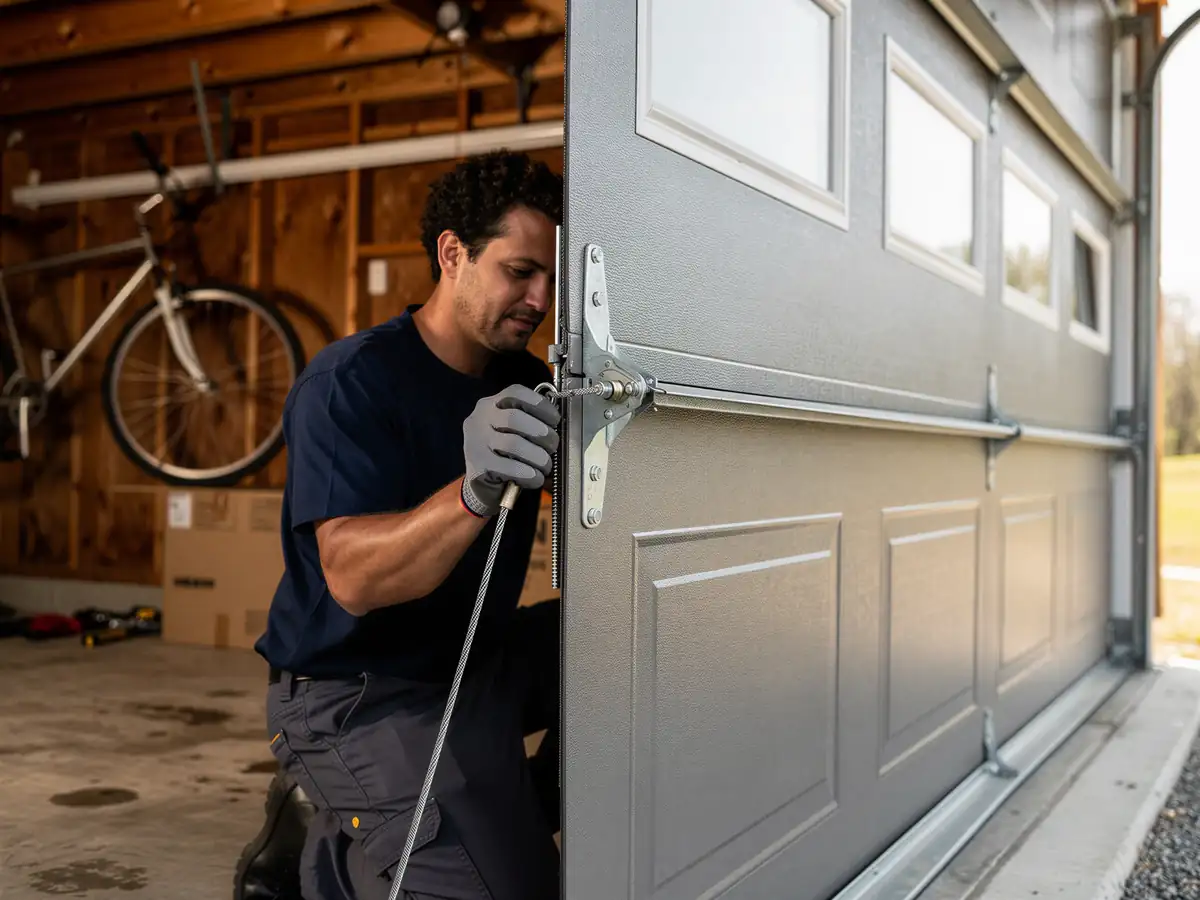
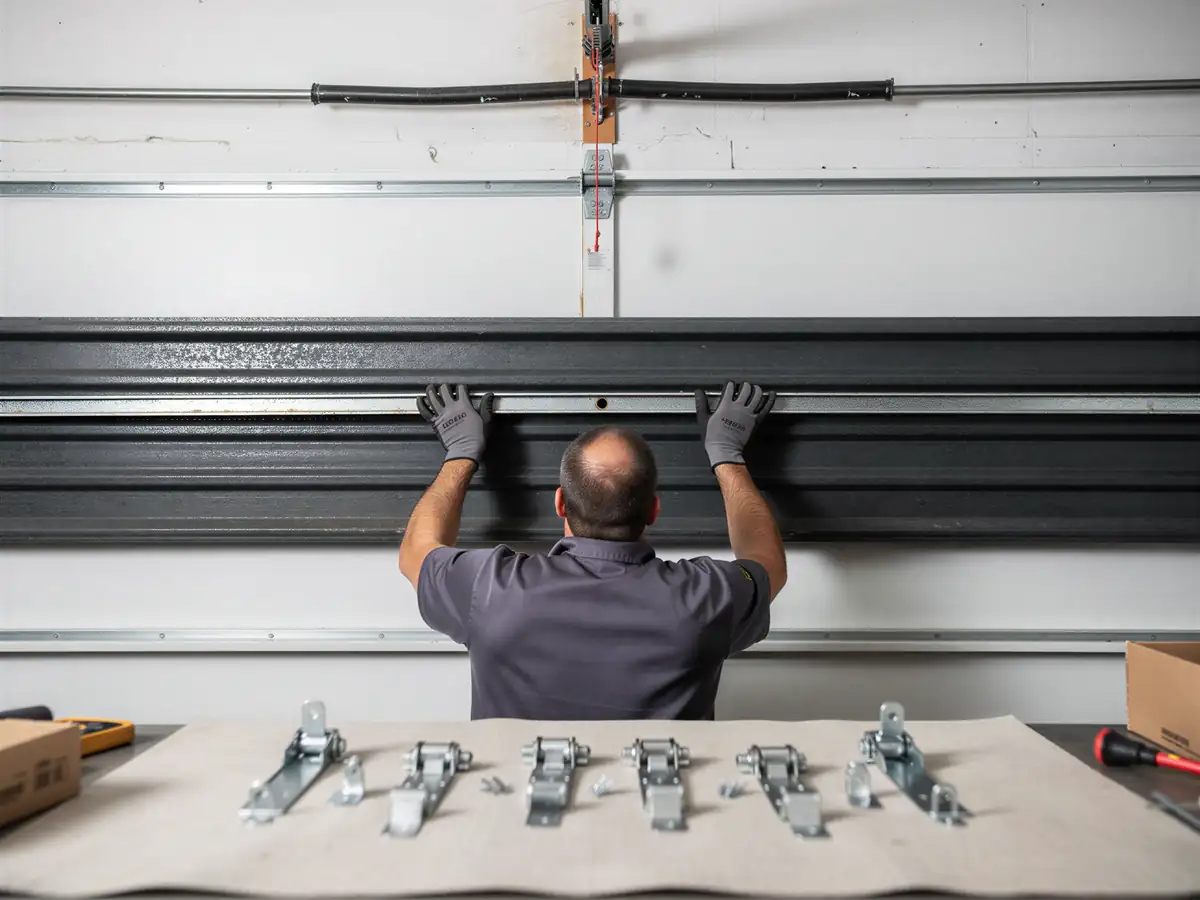
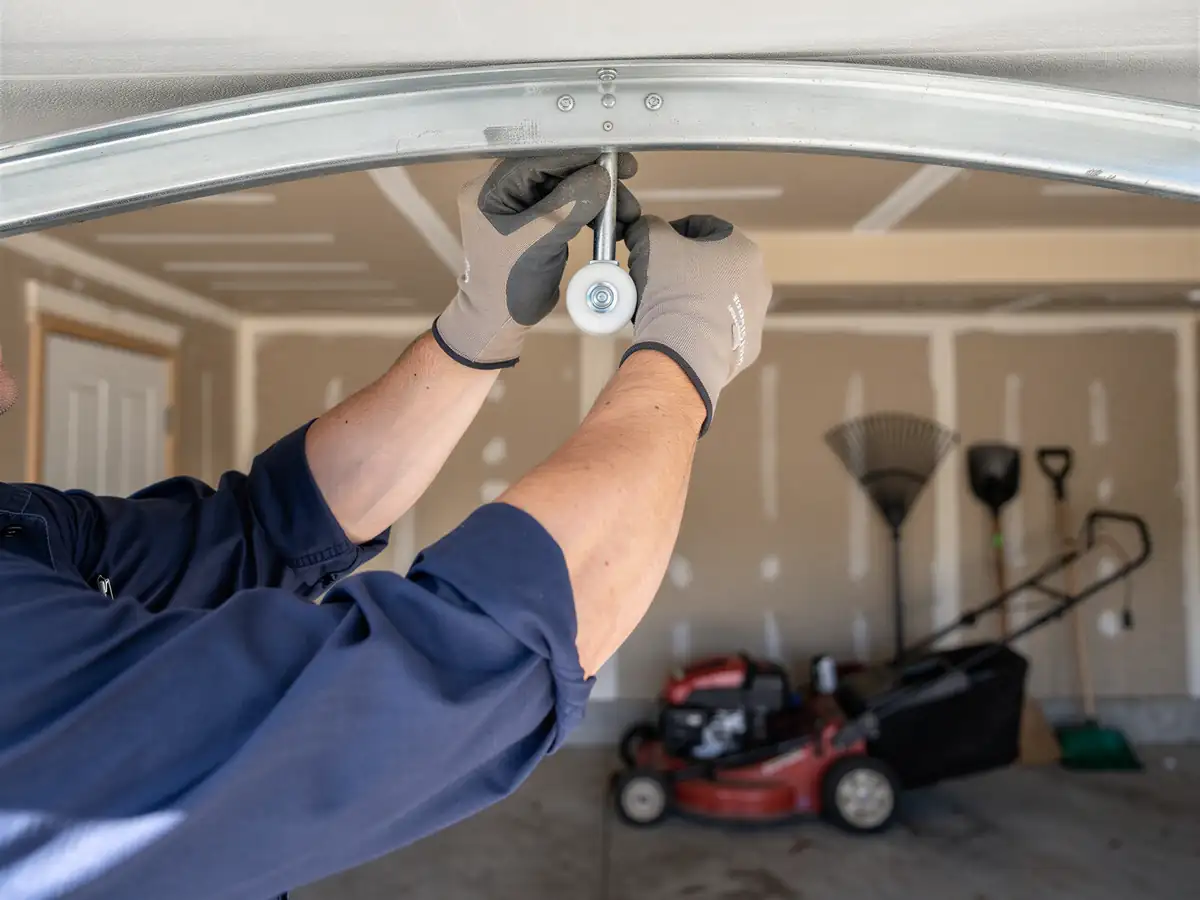
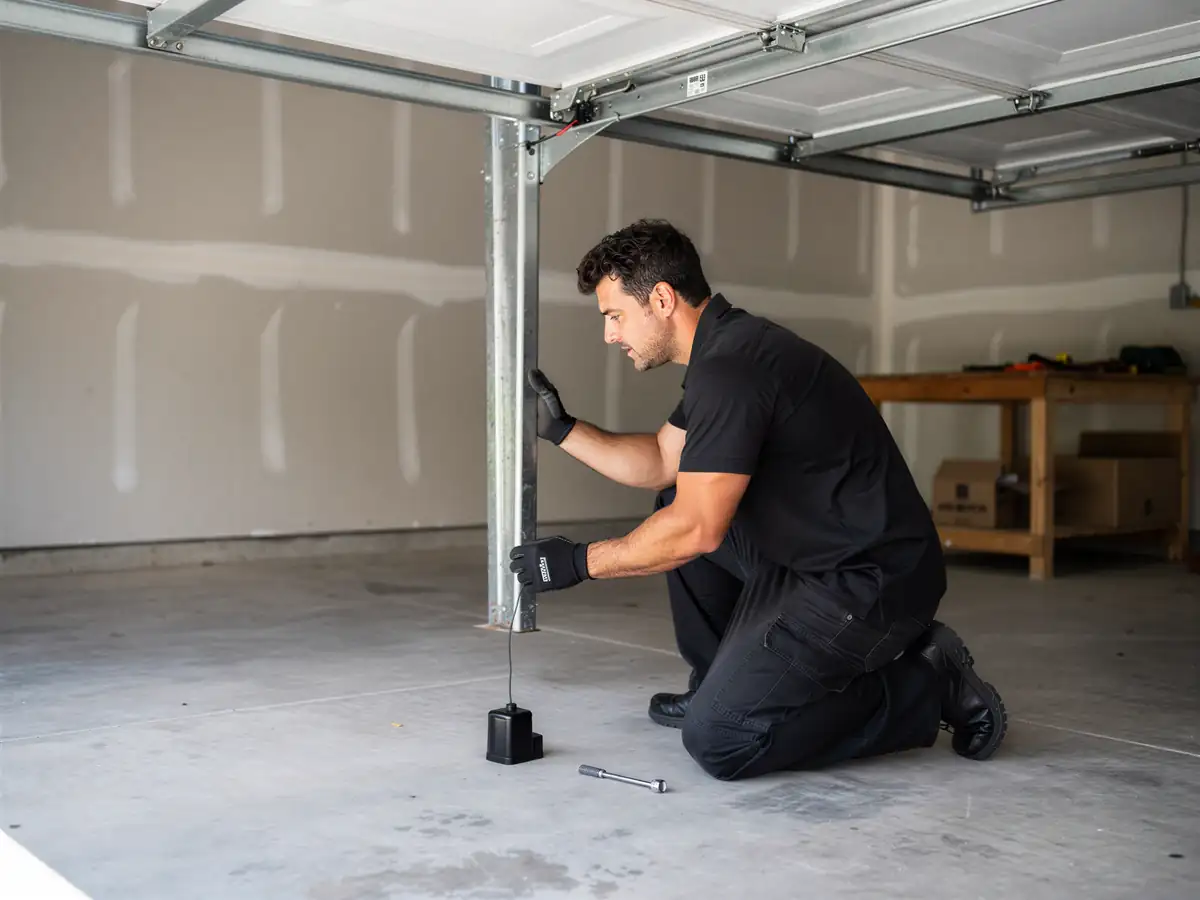
First, the rollers - stand to the side and watch the door travel. If a roller is riding on the edge of the track instead of centered in the channel, that's your off-track point. Second, the track brackets where they bolt to the framing. On a 1960s or 70s house, loose lag screws in old studs are the most common failure we see, not a bent rail. Third, the bottom brackets and cables on either side - uneven tension pulls one side up faster than the other and walks the door sideways. Fourth, anything blocking the track itself: a box, a bike, even a buildup of old grease and dust that's hardened in the channel.
Don't force the door back onto the track by hand while it's under spring tension
That's the one thing we'd tell you not to try yourself - a torsion spring holds enough stored force to do real damage, and a door that's partway off track is often still under load. If the door won't move freely after a visual check, that's a call, not a DIY fix.
Season by Season
Walnut Creek sits in a mild temperate band, so we don't get the freeze-thaw cycles that crack foundations and rack door frames the way colder climates do. That's the good news - framing movement here tends to be slow and small, not sudden.
What we do see is a seasonal pattern tied to that same mild swing. Through the warmer stretch, wood framing and track brackets expand slightly; through the cooler, damper months they contract back. On a door that's already got a loose bracket or a roller near the end of its life, that small seasonal flex is often what finally pushes it from "a little off" to actually jumping the track. It's not a dramatic climate event - there's no hard freeze to blame - it's just the slow cycle repeating on hardware that was already marginal.
This means the best time to catch it is before the shift, not after. A bracket that's a sixteenth of an inch loose in spring can be a visible lean by late summer.
How Local Conditions Play In
Put the two things together - 1960s-70s framing and a mild climate without violent temperature swings - and the picture for Walnut Creek is less about weather damage and more about slow mechanical drift. Doors here don't usually go off track because of a storm or a hard freeze. They go off track because fifty-year-old lag bolts loosen in fifty-year-old studs, a roller wears past its tolerance, or a cable stretches unevenly, and nothing announces it until the door is already riding wrong.
That's also why a quick visual check twice a year does more good here than it would somewhere with harsher seasons - there's no single event to watch for, just gradual wear on original hardware that was never meant to last this many decades. If your house is on the newer end of the range, closer to the 2000s builds, the framing is squarer and this matters less, but most of the area isn't built that recently.